
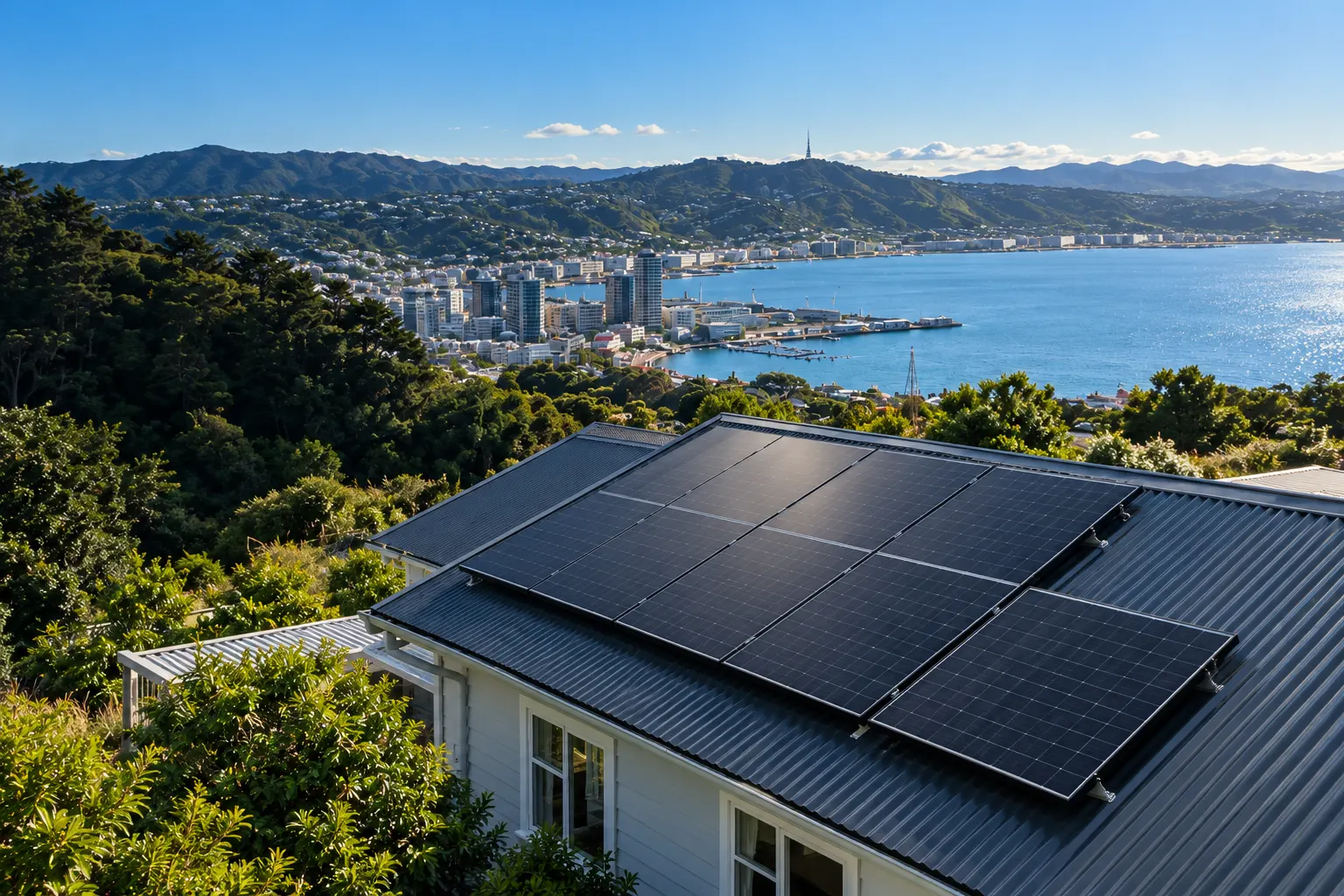
Solar system upgrades and expansion in Wellington start with existing equipment and changed electricity use. More panels can help after an EV, heat pump, battery or new daytime load, but capacity is not the whole answer. We inspect the array, inverter, switchboard and monitoring, then explain safe additions, compatibility, export settings, roof space, shading and the network process for the property.
What is included in a solar upgrade assessment
We identify the existing panel layout, inverter rating, monitoring arrangement, switchboard condition and available roof or ground space. We also ask what changed in the property, such as new daytime loads, an EV, a heat pump or plans for a battery. This helps establish whether more generation, different controls, storage or a replacement inverter would address the actual need. The first scope is based on the system in place, not an assumed blank roof.
The review considers whether old and new panels can be sensibly combined, whether separate strings or equipment are needed and whether the existing inverter has spare capacity. We check visible roof condition, shading, access and wind exposure. If the upgrade affects generation or export capability, we set out the likely connection steps. Electrical work and final documentation are arranged through currently licensed EWRB electrical workers.
Signs your solar system may be ready to expand
An upgrade assessment can be useful when daytime electricity use has increased or when monitoring shows the existing array is regularly fully used by household loads. New equipment can change the pattern, especially an EV charger, heat pump, home office or electric hot-water control. The goal is not simply to add the maximum possible panels. We assess whether extra generation is likely to be used on site at useful times.
It can also be timely when an inverter is nearing replacement, a roof renovation is planned or a battery is being considered. These are opportunities to review the system as a whole. If export is already limited, adding panels may not produce the expected benefit unless self-consumption or storage changes too. We explain that relationship before treating extra roof area as the deciding factor.
Adding panels, batteries and inverter capacity compared
Adding panels can increase daytime generation where the inverter, layout and network settings allow it. A larger or additional inverter may be needed if current capacity is already fully allocated. Mixing old and new panels can introduce electrical and performance trade-offs, particularly if their characteristics differ. We compare separate strings, additional equipment and replacement options based on the actual system rather than promising that every existing array can be expanded alike.
A battery can store some solar for later use and, if designed with backup capability, support selected circuits during an outage. It does not remove the need to consider export settings, winter output or load timing. Standard grid-tied solar without purpose-designed backup shuts down in an outage. We compare generation expansion, storage and load controls so you can see what each option changes in everyday operation.
What affects an upgrade or expansion scope
The scope depends on the current panel and inverter specifications, available capacity, roof layout, shade, wiring routes, switchboard condition and the desired new loads. Old and new panels may not be ideal on the same electrical string. Roof repairs, high wind exposure, complex access and coastal corrosion exposure can also affect mounting and installation work. We confirm these factors before recommending the form of expansion.
Network export settings may constrain what can be sent to the grid. The Electricity Authority's 2026 amendment sets a default 10kW export limit for straightforward small distributed generation, or a flexible or dynamic limit, while lower limits need assessment. That does not guarantee 10kW at every address. We make export a connection question, then size around useful on-site consumption first.
Wellington export limits, shading and wind exposure
Wellington Electricity serves Wellington City, Porirua, Lower Hutt and Upper Hutt. Since 11 May 2026 it has used flexible exports for small systems, so export may be asked to reduce during network congestion. In Kāpiti Coast, Electra confirms the connection details for the property. In Wairarapa, Powerco says capacity constraints can result in lower export limits. We identify the correct network before final design.
Wellington roofs vary widely in orientation, wind exposure and shade from hills, valleys and trees. NIWA SolarView models solar resource with topography, orientation and obstructions, but the property assessment remains important. Many Wellington sites sit in higher wind zones, so mounting requirements need checking against relevant design standards. We assess the existing roof and proposed new area rather than assuming matching panels will fit everywhere.
How the work is planned
- Share your monitoring information, existing equipment details and the new loads or objectives prompting the upgrade.
- We inspect the existing array, inverter capacity, switchboard, roof space, shading, access and wind exposure.
- We test upgrade paths for panel compatibility, string layout, inverter requirements, storage and useful self-consumption.
- We confirm the relevant export setting and any Wellington Electricity, Electra or Powerco application steps.
- We provide an itemised scope separating required electrical work from optional capacity, storage or control features.
What a good solar quote should show
Existing equipment is assessed first
We inspect current panels, inverter, monitoring and electrical interface before suggesting extra capacity. That identifies whether the inverter has room, whether a separate arrangement is needed and whether older panels can combine sensibly with newer equipment. It keeps a new load, such as an EV or heat pump, connected to your property's hourly use rather than a generic expansion size.
Export is treated as a network constraint
The Electricity Authority's 2026 amendment provides a default 10kW export limit for straightforward small distributed generation, or a flexible or dynamic limit, with lower limits requiring assessment. Local network conditions still matter. We confirm network process and explain how export affects proposal. This avoids relying on export income where on-site use, shading or a constrained connection changes the outcome.
Roof and wind checks inform the layout
An expansion adds load and mounting to a roof that may have different exposure on each face. We review the existing mounting, proposed area, shading, access and wind conditions before work is planned. Many Wellington sites sit in higher wind zones, making that review important. If the roof or structure needs further assessment, we identify it clearly instead of treating the new panels as a simple addition.
Your questions, answered.
Can I add panels to my existing solar system?
It may be possible, but panel characteristics, string design, inverter capacity, roof space and network settings need checking. Older and newer panels do not always combine well. We assess the system first and explain whether expansion, additional inverter equipment or a different approach is appropriate.
Will I need a bigger inverter?
Possibly. It depends on the existing inverter rating, panel layout and capacity to add. Some upgrades use spare capacity, while others need replacement or additional equipment. We inspect the arrangement and explain electrical trade-offs before selecting an appropriate approach.
Can I add a battery instead of more panels?
A battery stores solar for later, while more panels increase daytime generation. The better fit depends on load timing, current generation, export setting and backup priorities. Batteries provide outage support only with purpose-designed backup capability. We compare options using information from the existing system.
Will extra panels increase exports?
They can, but export is connection-limited and may be less valuable than on-site use. Wellington Electricity uses flexible exports for small systems, and other networks have their own requirements. We check the setting before final sizing and explain what extra daytime generation is likely to do.
Do upgrades need new compliance documents?
Electrical upgrade work requires appropriate compliance documents. Fixed wiring requires a Certificate of Compliance, and high-risk work needs a Record of Inspection. Changed connection arrangements may also need lines-company information or notification. We set out the relevant steps before work starts.
Further reading
Network rules and provider terms can change. Confirm current requirements for your address.