
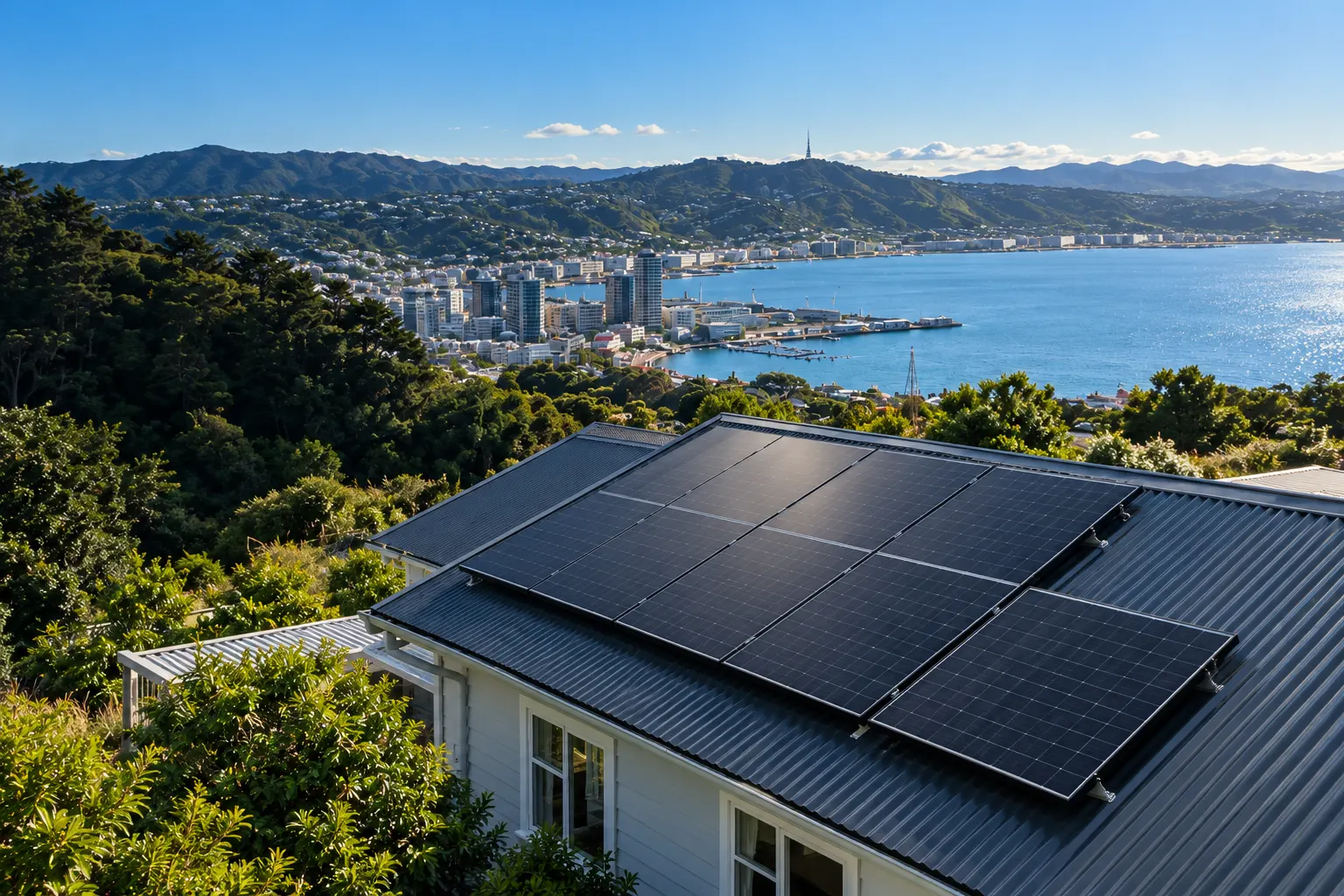
Solar panel cleaning and maintenance in Wellington is about checking the whole working system, not simply washing glass. Bird droppings, leaves, salt exposure and wind can affect what needs attention at a particular address. We start by looking at access, visible soiling, panel condition, mounting fixings and available monitoring information. The result is a clear record of what was checked, what needs action now and what should be watched over time.
What is included in solar maintenance
We inspect accessible panels for visible dirt, bird droppings, leaves and signs of damage, then discuss whether cleaning is appropriate for the surface and access conditions. We also review frames, visible mounting components and cable routes where safely accessible. Cleaning is not automatically required on every roof. The point is to distinguish ordinary weather exposure from soiling or faults that deserve attention.
Where the system has monitoring, we check the available production information with you for unexpected changes or gaps. A visual and monitoring check cannot replace electrical diagnosis when a fault is suspected, but it can help identify whether a repair visit is needed. We document the observations in plain language and explain any follow-up work, access requirements or safety limits before it is arranged.
Common signs your panels need attention
Visible bird droppings, heavy leaf build-up, salt residue or a clear patch of persistent shade are practical reasons to assess the array. A change in monitoring output can also be worth checking, particularly if it does not match the season or weather. We do not assume every lower-production day is a fault, because winter days are shorter and cloudy conditions reduce output. We look for a pattern before recommending further work.
A maintenance visit can also make sense after severe weather, roof work or nearby tree changes. Wind-exposed sites deserve a closer look at accessible fixings and the roof interface. If there are cracked panels, damaged cables, water entry, an inverter warning or an electrical smell, do not attempt a roof inspection yourself. Tell us what you observed so the next step can be safely planned.
Cleaning, inspection and repair options compared
A cleaning visit is suited to accessible panels with visible soiling that is likely to affect light reaching the surface. An inspection is broader and can focus on mounts, visible cables, roof penetrations and monitoring. A repair assessment is more appropriate where there is an inverter alert, damaged equipment or an unexplained production issue. We describe the evidence for each option rather than treating cleaning as a substitute for diagnosis.
Some sites need a regular check because they are near the coast, under trees or exposed to birds. Others may only need inspection after a change in performance or a roof project. Frequent cleaning can add access and roof-safety considerations without solving an underlying fault. We help you choose a practical interval based on the site, the monitoring history and what is visible from a safe location.
What affects cleaning and maintenance scope
The main factors are panel number, roof pitch, height, access, the type and extent of soiling, and whether safe roof access is available. Coastal exposure, nearby trees and birds can change the inspection focus. A system spread across several roof faces may need more time than a single accessible array. We assess the safe method first, because roof and weather conditions set the limits for any work.
The scope can also change if monitoring needs investigation, if mounting components need closer review or if a fault requires an electrical visit. Repairs and replacement parts are assessed separately from routine cleaning. We do not promise a fixed production improvement from cleaning, because the effect depends on actual soiling, shading, weather and the condition of the system.
Wellington coastal salt, wind and seasonal output
Coastal homes in Petone, Eastbourne, Plimmerton, Kāpiti Coast, Island Bay and Lyall Bay warrant a corrosion-exposure assessment for fixings and frames. That is why a maintenance visit looks beyond the panel surface. We check what can safely be seen and identify any item that needs closer investigation. Open and hill sites also need sensible attention to wind-exposed mounting components.
Wellington terrain makes shading site-specific. Tree growth, a new structure or a seasonal sun angle can change the pattern on part of an array. Panels produce less in winter because days are shorter and the sun is lower, and cloudy days reduce output. We compare monitoring information with those conditions before treating a production change as a cleaning or equipment problem.
How the work is planned
- You tell us about visible soiling, monitoring changes, roof access, coastal exposure and any recent weather or roof work.
- We assess safe access and inspect accessible panels, frames, mounting areas and visible cable routes.
- We review available monitoring information with you to identify unusual changes or gaps in reported generation.
- We explain whether cleaning, a maintenance follow-up or a separate repair assessment is the appropriate next step.
- We complete the agreed safe work and record observations, limitations and recommended follow-up actions.
What a good solar quote should show
A whole-system check, not just a wash
We inspect accessible panel surfaces alongside visible frames, mounting areas, cable routes and monitoring information. That separates ordinary dirt from a possible equipment or installation issue. The visit is framed around what can be safely checked at the property. If evidence points to an electrical fault or component damage, we recommend the appropriate repair assessment rather than unsupported final conclusions.
Coastal exposure gets specific attention
Coastal locations such as Petone, Eastbourne, Plimmerton, Kāpiti Coast, Island Bay and Lyall Bay warrant corrosion-exposure assessment for frames and fixings. We include this in maintenance because salt and wind can change what should be inspected. The check does not assume a fault at every coastal home. It records site conditions and any visible item needing closer attention there.
Monitoring is checked in context
We review the monitoring information available to you and discuss apparent changes against weather, season and shading. Panels produce less during shorter winter days and on cloudy days, so a single low-output period is not enough to diagnose a problem. Looking at a pattern helps determine whether cleaning, an inspection or a repair visit is more appropriate. This is a practical process, not a guaranteed production outcome.
Your questions, answered.
Do solar panels need regular cleaning?
Not every array needs cleaning on a fixed schedule. Bird droppings, leaves, coastal residue and nearby trees can cause persistent soiling. We assess what is visible, safe access and monitoring information. The recommended interval should match the site, not a universal timetable.
Can I clean panels myself?
Roof work has fall and electrical risks, so do not climb onto a roof without safe access and the right capability. Avoid abrasive methods that could damage panels. If there is cracking, cable damage, water entry or an electrical warning, do not clean. Arrange assessment instead.
Does salt air affect solar panels?
Coastal exposure can make corrosion assessment important for frames and fixings. It does not mean every coastal system has a problem. We consider the exposure, visible condition and property access. A maintenance visit can identify whether closer inspection or remedial work should be planned.
Why has monitoring shown less generation?
Lower generation can reflect winter daylight, cloud, shade, soiling, an inverter setting or equipment fault. Compare the change over time and note alerts. We review monitoring and visible system condition before deciding whether cleaning or repair assessment is then needed.
Will cleaning guarantee higher output?
No. Results depend on actual soiling, season, weather, shading and system condition. Cleaning can be appropriate where dirt blocks light, but it will not correct an inverter fault or tree shade. We explain the observed reason for any recommended work.
Further reading
Network rules and provider terms can change. Confirm current requirements for your address.