
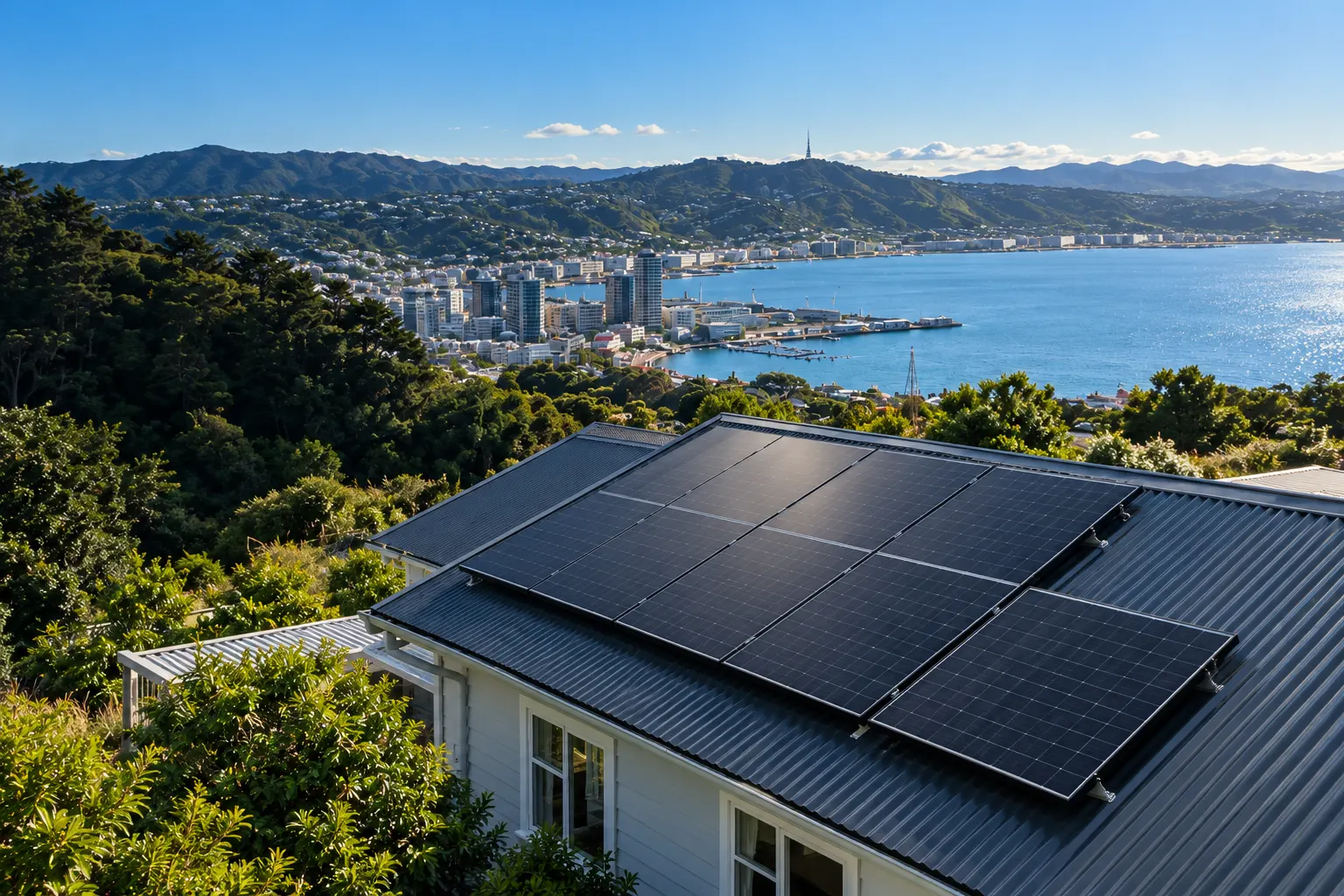
Off-grid and lifestyle block solar in Wellington starts with the loads your property must run, not a standard panel count. We map everyday use, seasonal changes and essential equipment, including homes, sheds, water pumps, fencing, workshops and remote buildings. We assess generation space, shading, access and storage so the proposal explains expected operation and its limits at the address.
What an off-grid assessment includes
We begin with a site conversation and an address-specific review of likely generation space, roof condition, shading and access. You tell us which loads are essential, which can wait, and when they run. For a lifestyle block, that often separates household use from pumps, fencing, sheds and other equipment. The aim is to make the proposed system match an actual operating pattern rather than an assumed average home.
The scope also sets out battery storage, backup arrangements, switchboard work and the practical operating choices that affect autonomy. We explain when a generator, load controls or a grid connection may still have a role. Electrical work is arranged with currently licensed EWRB electrical workers, and fixed wiring requires a Certificate of Compliance. Where work requires inspection, the required documentation is included in the handover process.
Signs an off-grid approach may suit your property
An off-grid assessment can be useful when bringing a grid connection to a remote building is impractical, or when a property already has a generator and you want to understand a different operating approach. It can also suit a new shed, sleepout or lifestyle block project where power use can be planned before equipment is selected. The first useful question is what must keep operating, rather than how many panels will fit.
Rural properties often have loads that cannot be treated like a city household. Electra advises rural customers to plan for electric water pumps, fences and milking sheds during outages. That does not mean every property needs the same backup arrangement. We use that kind of load list to discuss storage, generator support and what equipment can be scheduled for daylight production.
Off-grid, hybrid and grid-connected options
A fully off-grid system is designed to supply the property without relying on the network, so winter generation, battery reserve and peak loads need careful attention. A hybrid system can use solar and storage while retaining the grid as a backstop. A conventional grid-connected system may cost less to operate in some locations, but standard grid-tied solar shuts down in an outage unless it has purpose-designed backup capability.
More storage can extend how long selected loads run, but it also changes space, equipment and control requirements. More solar can help during daylight, yet it does not remove the effect of short winter days or shaded hours. We compare these trade-offs against your use pattern, site constraints and tolerance for managing loads. The recommendation should show what remains available when conditions are less favourable.
What affects off-grid system cost
System cost is shaped by daily electricity use, the largest motor or appliance loads, desired backup time, battery capacity and the available mounting area. Ground work, trenching, switchboard changes, difficult access and the distance between generation and loads can also matter. A site with substantial shade may need a different layout or more careful load planning. We identify these factors before making a scope recommendation.
The equipment needed to manage pumps, generators, backup circuits or multiple buildings also affects the scope. Roof structure and wind exposure may require further design input. Many Wellington sites sit in higher wind zones, so mounting and structural requirements need checking against the relevant New Zealand wind and structural design standards. The quote should separate the essential electrical work from optional resilience features.
Wellington region sites, winter and rural outages
Hills, valleys and tree cover make shading highly specific across the Wellington region. NIWA SolarView models address-specific solar resource using topography, orientation and obstructions, which is useful context for an assessment. We check the actual site rather than treating a nearby suburb as a forecast. Winter has shorter days and a lower sun, so panels produce less then, although they still generate on cloudy days at reduced output.
For Wairarapa, Kāpiti Coast and hill-country sites, access and outage planning can be as important as annual generation. We ask which loads need priority if weather or a network fault interrupts supply. Coastal locations also need a corrosion-exposure assessment for frames and fixings. If a grid connection is retained, we explain the relevant lines-company process and what information is needed before work is finalised.
How the work is planned
- Tell us about the buildings, essential loads, seasonal work and any existing generator or grid connection.
- We assess the address, generation area, shading, roof or ground-mount options, access and wind exposure.
- We build a load plan that distinguishes essential circuits from equipment that can run during daylight.
- We compare off-grid, hybrid and retained-grid options with clear winter and peak-demand limits.
- We confirm electrical scope, documentation, mounting requirements and any lines-company work before installation planning.
What a good solar quote should show
Load planning before equipment selection
We start with what you need to run and when it runs. Steady household demand is listed separately from short, high-demand equipment such as pumps or workshop tools. The scope can show which circuits need backup, which loads can move into daylight and where a generator remains sensible. It keeps the decision focused on operation, not a generic package.
Wind and mounting checked for the site
Wellington properties can have very different exposure, especially on ridges, coastal sites and rural land. We assess mounting location, roof condition and wind exposure in the site review, then check applicable design requirements before installation planning. New Zealand wind zones and structural design actions are relevant to the mounting decision. If structural input is needed, we identify it rather than assuming a standard layout fits.
Electrical documentation is part of handover
Solar PV is prescribed electrical work in New Zealand. We arrange work through currently licensed EWRB electrical workers and include the required electrical documentation in the handover process. Fixed wiring requires a Certificate of Compliance, and high-risk work needs an inspection and Record of Inspection. This gives you a record of the completed electrical work alongside the practical explanation of how to operate the system.
Your questions, answered.
Can an off-grid system run a water pump?
It can be planned around a pump, but we need its starting demand, run time and seasonal use. We ask whether it must run during an outage, can run in daylight and has storage-tank flexibility. That information affects battery, inverter and generator-support decisions.
Will solar work through a Wellington winter?
Panels produce less in winter because days are shorter and the sun is lower. They still generate on cloudy days at reduced output. An off-grid plan must allow for the lower-production period and loads that cannot wait. We explain the winter operating approach.
Do I need a generator as well?
It depends on winter demand, battery reserve, large motor loads and how much work can wait. We compare generator support with additional solar, storage or load controls. Each option changes day-to-day operation, so we explain the practical limits before you choose.
Can I keep a grid connection and add batteries?
Yes. A hybrid system can retain the grid while using solar and batteries for selected use or backup. Standard grid-tied solar shuts down during an outage without backup capability. We explain the difference between self-consumption, stored energy and outage backup before choosing a layout.
What paperwork is required?
Electrical work needs the relevant compliance documents. Fixed wiring requires a Certificate of Compliance, and high-risk work needs a Record of Inspection. A retained grid connection may also require lines-company application or notification. We set out the applicable address-specific steps before work proceeds.
Further reading
Network rules and provider terms can change. Confirm current requirements for your address.