
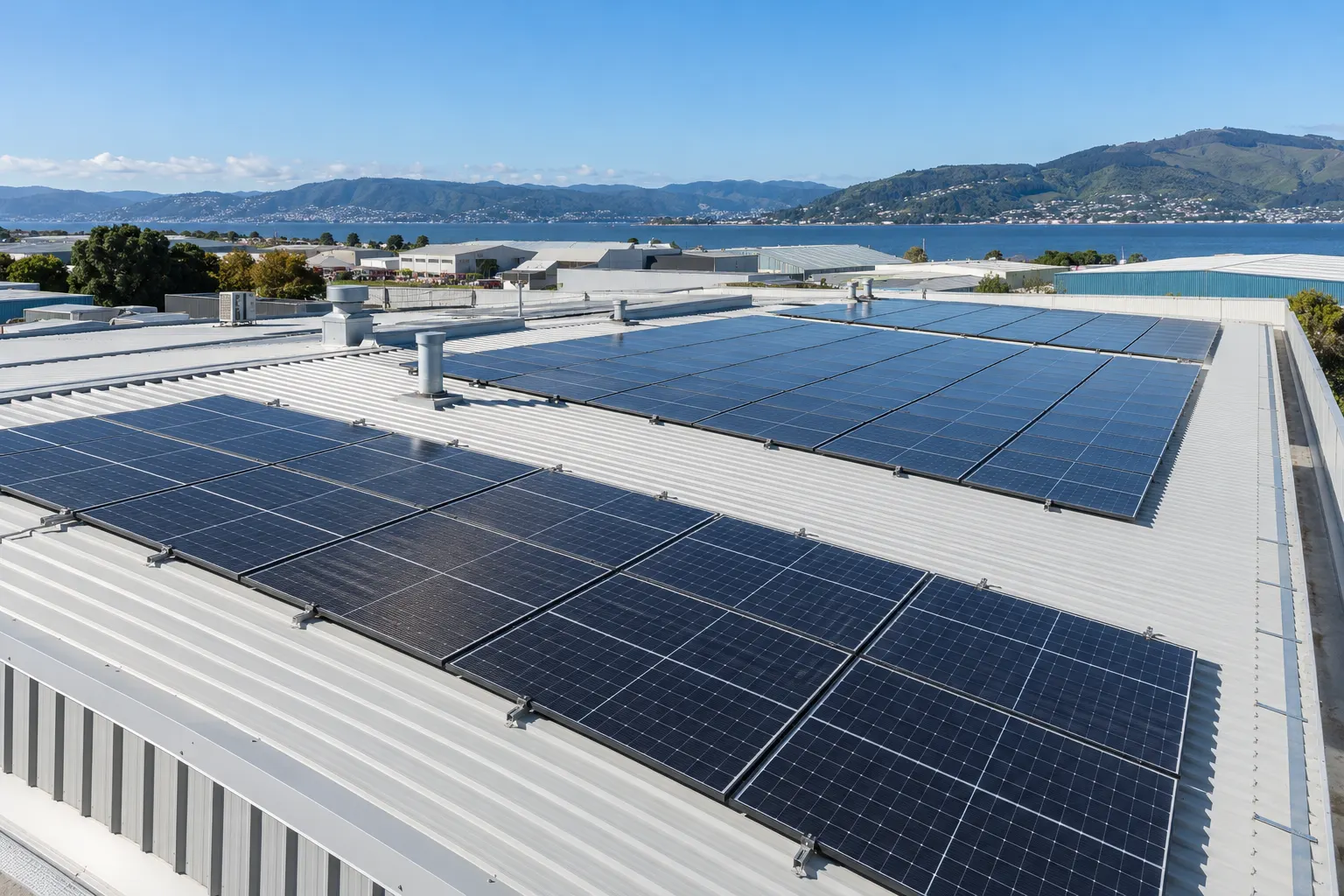
Farm solar in Wellington needs to be built around the timing and scale of work on the property. A dairy shed, irrigation pump, woolshed, workshop and water system can each create a different daily load pattern. We begin by identifying what runs, when it runs and which equipment is essential. That gives a better basis for discussing solar area, inverter capacity, export limits and whether storage or backup has a useful role for the farm.
What is included in a farm solar assessment
We review the farm's daytime electricity use, major motors, building locations and likely solar mounting areas. The assessment considers dairy sheds, irrigation, pumps, woolsheds, workshops and staff housing where relevant. We also ask about seasonal work, because irrigation or processing loads may change markedly across the year. The purpose is to identify when solar can serve on-site demand and when exported energy is more likely.
A site review covers roof condition, shading, access, wind exposure, switchboard arrangements and cable routes between buildings. We describe any likely electrical upgrades and the documentation required for the work. If the property is grid-connected, we outline the application pathway with the lines company. For a network-connected system, exported energy and available capacity must be considered alongside daytime self-consumption.
Signs farm solar may be worth assessing
A farm solar assessment is useful when a property has reliable daytime loads, especially equipment that operates while panels are producing. Pumps, irrigation, dairy sheds and workshop activity are common examples, but the useful pattern is specific to the farm. It can also help when an existing electricity bill does not explain which loads drive demand. We look for operational information before suggesting a system size.
It may also be timely when a roof is being repaired, a shed is being built, a pump is being replaced or electrical distribution is being updated. These projects can affect access, cable runs and switchboard scope. In rural areas, resilience planning is another prompt. Electra advises customers to plan for electric water pumps, fences and milking sheds during outages, so we discuss which loads need a contingency plan.
Farm solar, battery storage and export compared
Solar used directly by farm equipment is usually the first part of the conversation. At the time of writing, published retailer buy-back rates are typically below the price paid to import electricity, so using generation on site is usually worth more than exporting it. That makes load timing important. We can compare a solar-only layout with controls that shift suitable work into daylight where operationally practical.
Battery storage can retain some daytime generation for later use or support selected loads, but it is not automatically the right answer for every farm. It adds equipment, space and control considerations. Exporting can still be part of the model, yet the allowed export level depends on the connection. We explain the likely network questions before treating export income as a reason to oversize the array.
What affects farm solar cost
The scope depends on electricity demand, the size and location of roofs, load timing, inverter capacity and the distance between solar arrays and farm buildings. Larger motors and multiple switchboards may need additional design work. Ground-mounted arrays can require access, trenching and civil preparation. We identify these site-specific factors in the assessment rather than treating a farm shed as a standard residential roof.
Wind exposure, roof structure, corrosion exposure and safe access can change mounting and installation requirements. Storage, backup circuits and monitoring arrangements are optional decisions that also affect scope. The relevant lines company may require application information, approved equipment details and final compliance records. We show which items are core to the electrical connection and which are choices based on the farm's operating priorities.
Wellington region farm networks and conditions
Farm properties across Kāpiti Coast and Horowhenua are generally within Electra's network, while Wairarapa is served by Powerco. Electra says its application process differs for systems at or below 10kW and those above 10kW, with connection details confirmed for the property. Powerco publishes a free application for systems up to 10kW and states that export is subject to capacity and approved inverter requirements.
Open sites need a considered wind assessment, and hill country can make shading and access less obvious than a map suggests. Winter output is lower because days are shorter and the sun is lower, while summer generation is higher. We discuss that seasonal pattern alongside irrigation, milking and pumping schedules. For coastal sheds, we include corrosion exposure in the review of frames and fixings.
How the work is planned
- We list buildings, pumps, irrigation, dairy shed equipment, workshop use and the hours each load normally operates.
- We inspect possible array locations, roof condition, shading, wind exposure, access and electrical distribution between buildings.
- We compare daytime self-consumption, battery storage and export against the farm's actual operating pattern.
- We confirm likely inverter capacity, switchboard work and the relevant Electra or Powerco connection requirements.
- We prepare a plain scope showing essential work, optional resilience features and expected application documentation.
What a good solar quote should show
Daytime loads lead the design
We start with farm operations because a panel count alone does not show where solar will be used. By mapping pumps, dairy activity, irrigation and workshop work against daylight hours, we explain when generation is likely to be used on site and when export becomes relevant. This gives a basis for deciding whether controls, storage or a simpler solar-only design suits the operation.
Export limits are explained before sizing
Network export settings can affect how much generation can leave the property. Powerco says single-phase export up to 10kW is subject to capacity and an approved inverter, and constrained transformers can receive lower limits. Electra confirms connection details for each site. We include the appropriate lines-company questions before final sizing, rather than presenting export as a fixed return from every farm.
Farm resilience is discussed by load
A power interruption has different consequences for a water pump, electric fence, dairy shed and woolshed. We ask which loads need to keep working, which can wait and what backup is already available. This process can clarify whether batteries, generator support, backup circuits or water storage provide the most practical resilience. The result is an operating plan matched to the property, not a generic outage claim.
Your questions, answered.
Can solar run irrigation pumps?
Yes, but motor size, starting demand, run hours and seasonal timing all matter. We first identify whether pumping can happen in daylight or must run at fixed times. That information lets us compare direct solar use, storage, controls and generator support where needed.
Should a farm add a battery?
A battery may help when energy is needed after solar production falls or selected circuits need backup. It also adds equipment and operating trade-offs. We compare it with daylight load shifting, generator retention and surplus export. The choice depends on farm work, outage priorities and connection conditions.
Which lines company applies to my farm?
Electra serves Kāpiti Coast and Horowhenua, while Powerco serves Wairarapa. Their distributed-generation processes differ. Electra requires installer application and confirms property connection details. Powerco publishes application and export requirements. We identify the relevant network before confirming the connection pathway.
Will exporting surplus solar pay for an oversized array?
Published buy-back rates are typically below import prices, so using solar power on the farm is usually worth more than exporting it. Export limits can also constrain network supply. We explain these factors and assess daytime loads before recommending a size dependent on surplus export.
Can solar provide power during a rural outage?
Standard grid-tied solar shuts down during an outage for line-worker safety. Backup needs purpose-designed circuits and inverter operation. We identify the loads you want supported and compare storage or generator options. The appropriate arrangement depends on what must remain operating.
Further reading
Network rules and provider terms can change. Confirm current requirements for your address.