
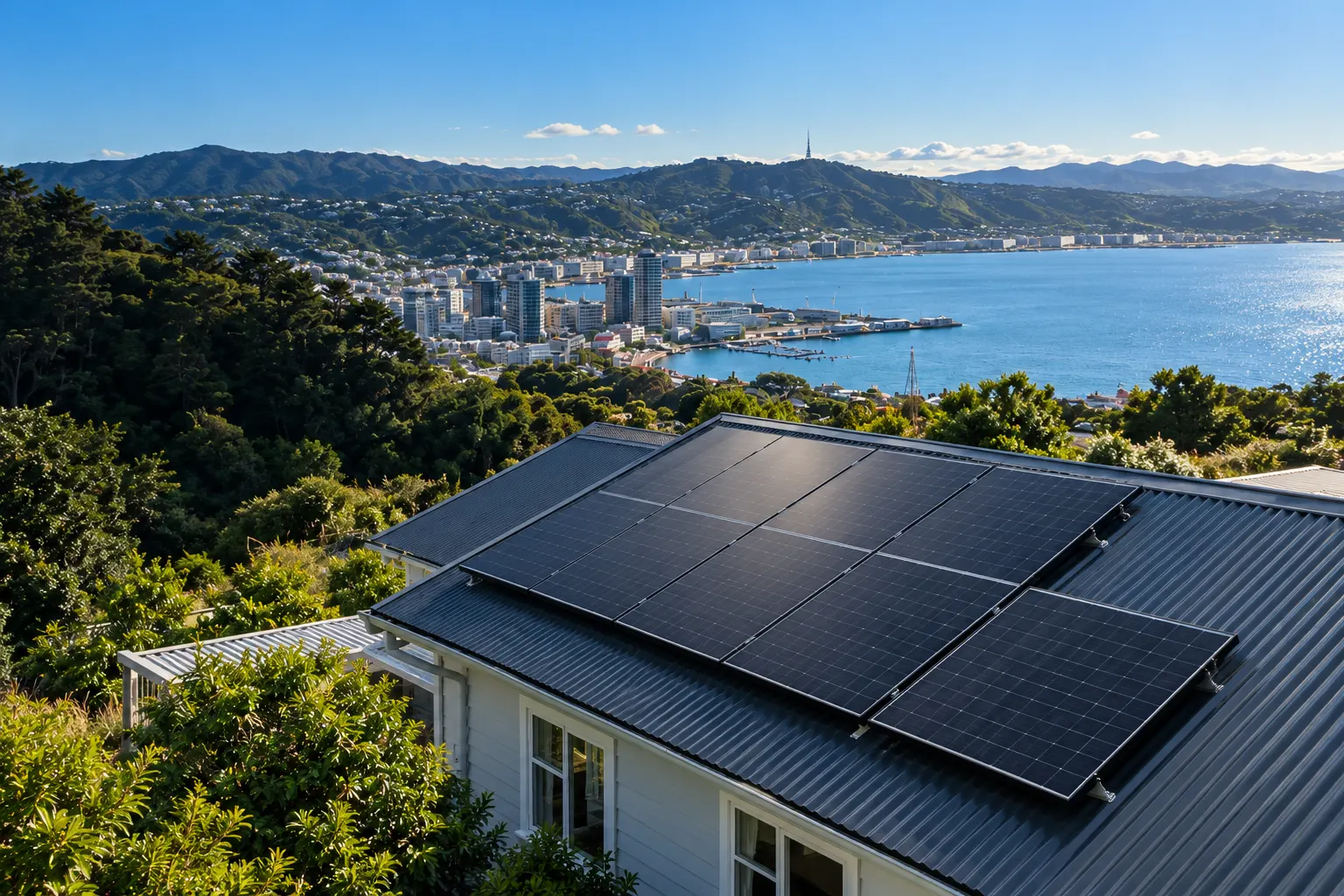
Residential solar in Wellington needs more than a panel count. We start with how your household uses electricity, when people are home, the roof shape, shade and the network serving your address. You will get plain explanations of the connection steps, the documents required after electrical work, and choices that may suit a home with different daytime routines.
What a residential solar assessment includes
We assess the roof area, orientation, roof access and shading through the day. The conversation also covers appliances, heating, hot water and the times electricity is used. This helps separate power you may use at home from power likely to go to the grid.
The design stage includes a mounting and roof check for the site's wind exposure, plus a review of the switchboard and cable route. We explain the proposed layout in ordinary language before an application is submitted. Electrical work is planned with EWRB-licensed workers, and we arrange the required compliance paperwork, including a Certificate of Compliance for fixed wiring.
Signs rooftop solar may suit your home
Solar can be worth investigating when regular daytime use comes from people working at home, heat pumps, hot-water control, cooking or other predictable loads. It can also suit a household that wants to understand its use before replacing a major appliance. The useful question is not simply how much power you buy over a year, but when you buy it and what part of a solar system you could use directly.
A clear roof is helpful, but it is not the whole answer. Homes in Karori, Brooklyn, Ngaio or valley locations can have shade that changes by season or time of day. We map the constraints at the address, discuss whether trimming or layout changes are relevant, and identify when a smaller array, staged work or no installation is the more sensible outcome.
System size and export options compared
A smaller array may better match modest daytime use and leave less surplus to export. A larger array can cover more generation across the year, but it can also send more electricity to the grid when nobody is using it. At the time of writing, residential buy-back rates are generally lower than import rates, so using solar power in the home is usually more valuable than exporting it. Check your retailer's current plan before deciding.
Grid-connected solar is the usual option where a home already has a standard electricity connection. It does not provide power in an outage unless the system is designed with battery backup capability. We can also discuss allowing for a future battery or hot-water diversion, rather than adding equipment that has no clear role in your household routine.
What affects residential solar cost
The main factors are array size, roof form, access, mounting requirements, switchboard condition, cable distance and any electrical upgrade required. Shading may change the layout or the number of panels that make sense. A complex roof can take more planning and installation time than a simple open roof, while higher wind exposure can affect the mounting design and structural review needed.
Connection requirements also affect the scope. Wellington Electricity, Electra and Powerco have different distributed-generation processes, and the applicable lines company depends on the address. We identify that early, explain the likely paperwork, and include the work needed to prepare the application. The quote should show what is included rather than leaving network and compliance steps as vague extras.
Wellington roof, weather and connection context
Many Wellington sites sit in higher wind zones, so we check the roof and proposed mounting against the relevant NZ wind design approach for the property. Hills, valleys, trees and neighbouring buildings can make shading highly specific to one address. Coastal homes, including in Island Bay, Petone, Eastbourne and Plimmerton, also need a corrosion-exposure assessment for fixings and frames.
For Wellington City, Porirua and the Hutt Valley, Wellington Electricity requires a distributed-generation application before connection and then a Record of Inspection and Certificate of Compliance after installation where required. Since 11 May 2026, flexible export arrangements may reduce output during network congestion. Winter generation is lower because days are shorter, so we discuss yearly patterns rather than presenting one season as typical.
How the work is planned
- Assess your electricity use, roof condition, shading, access and local lines-company area at the property.
- Design a roof layout and system size around likely self-consumption, wind exposure and electrical requirements.
- Apply to the relevant lines company with the system details required for your connection.
- Install the agreed equipment, mounting and wiring after approval and site preparation are complete.
- Certify the prescribed electrical work and provide the required Certificate of Compliance documentation.
- Switch on after connection approval, then explain monitoring, exports and normal operating checks.
What a good solar quote should show
Sizing starts with daytime use
We ask how electricity is used through the day before recommending an array size. That includes people at home, heat pumps, hot water, cooking and regular equipment. The purpose is to make self-consumption visible in the decision, not to base the conversation on a large export assumption. You can then compare a proposed layout with the routine your household actually has.
Wind and shade are checked at the address
We check the roof against its applicable NZS 3604 wind zone and consider whether a structural review is needed. We also assess roof orientation and shade from terrain, trees and nearby buildings. These checks matter on Wellington's exposed and hilly sites, where a generic layout can overlook a constraint apparent only after looking at the property.
Connection paperwork is part of the plan
For homes in the Wellington Electricity area, the connection process includes the distributed-generation application and post-installation notification with the required ROI and CoC. We prepare and handle the application process for the address, then explain what the network decision means for exporting. This keeps the connection work visible alongside the roof and electrical work, rather than leaving it until the end.
Your questions, answered.
Will solar panels work on cloudy Wellington days?
Panels still generate on cloudy days, but output is reduced compared with clear conditions. They produce less in winter because the days are shorter and the sun is lower. We discuss expected seasonal variation with the roof assessment, so the system is considered across the year rather than judged only by summer production.
Do I need a battery with residential solar?
No. Grid-connected solar can work without a battery. A battery may be worth discussing if your evening use is high or you want selected backup circuits, but it adds equipment and design choices. Standard grid-tied solar shuts down during a grid outage unless backup capability has been specifically designed into the system.
Who applies to the lines company?
We handle the lines-company application as part of the project. The right process depends on your address. Wellington Electricity serves Wellington City, Porirua, Lower Hutt and Upper Hutt, while Electra serves Kāpiti Coast and Powerco serves Wairarapa. We explain the relevant approval path before installation is scheduled.
Will I be paid for exported solar electricity?
Retailers may pay a buy-back rate for exported electricity, but plans and rates change. At the time of writing, published buy-back rates are generally lower than the price of imported electricity. We recommend checking your retailer's current terms and considering how much solar electricity your household can use directly.
Do solar panels need building consent?
Many residential rooftop systems may not need a building consent, but larger arrays, high wind zones or structural changes can. All work must still meet the Building Code. We check the consent position for your property and involve an engineer where the roof or site conditions call for it.
Further reading
Network rules and provider terms can change. Confirm current requirements for your address.