
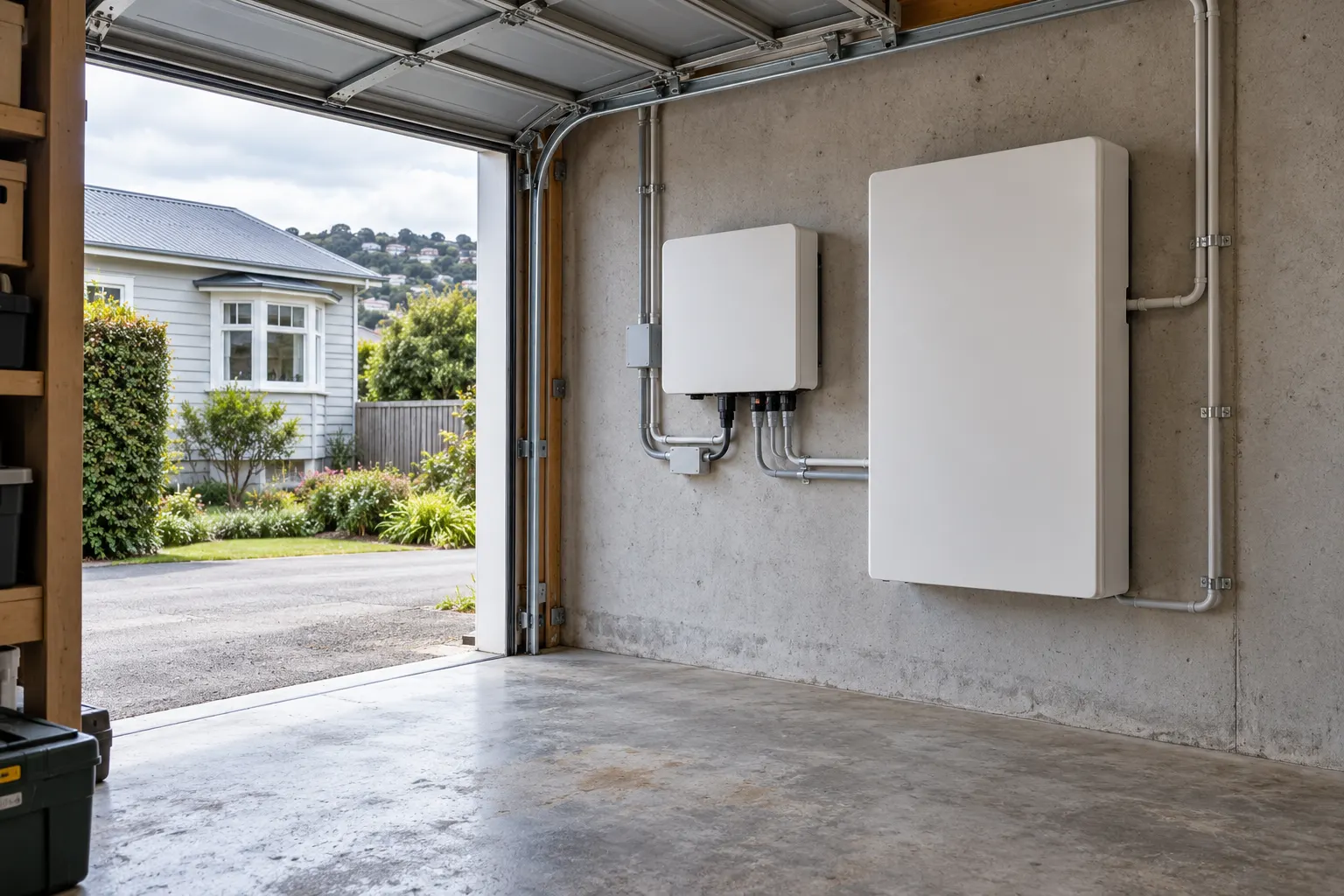
Solar battery storage in Wellington can change when a household uses its solar electricity. We start with evening demand, daytime generation, the circuits you would value during an outage and the existing electrical setup. That lets you compare a battery with other options, including a solar-only system or load control. We explain backup capability plainly, including what continues to work and what does not.
What a battery storage design includes
We review your electricity pattern, proposed or existing solar array, switchboard space and the loads you may want to support. The discussion separates energy shifting from outage backup, because they can require different choices. A fridge, lighting, internet equipment and selected power points may be practical priorities, while electric cooking, large heating loads or whole-house backup can require a different approach.
The design covers battery location, cable routes, protection equipment, inverter arrangement and the circuits selected for backup if required. We use EWRB-licensed workers for prescribed electrical work and provide the applicable Certificate of Compliance. We also explain monitoring, normal operating modes and how the equipment responds when solar production, household demand or the grid connection changes.
Signs a battery is worth discussing
A battery may be worth assessing when a household generates solar electricity during the day but uses more power after work or in the evening. It can also be relevant where a home wants selected essential circuits available during an outage. The first step is identifying the loads and desired outcome, rather than assuming that every solar household needs storage.
Wellington households thinking about resilience may also want to discuss backup, but capability needs careful definition. Standard grid-tied solar shuts down during an outage to protect line workers. A battery only supplies backup when the system has been designed with backup circuits or an islanding inverter. We make that distinction before equipment is selected, so expectations match the designed system.
Battery size and backup approaches compared
A smaller battery may shift a portion of evening use, while a larger unit may store more solar or support selected loads for longer. Bigger capacity is not automatically useful if the household does not regularly charge it from solar or if the selected backup loads are modest. We compare usable energy, charging rate, discharge rate and the role the battery would have in the home.
Energy shifting and backup are related but different choices. A battery configured for selected circuits can prioritise essentials during an outage. Whole-home backup can involve more switchboard and load-management work, especially where large appliances are present. We discuss the trade-offs in control, complexity and likely use, then design only the backup function that has a clear purpose for your household.
What affects battery storage cost
Cost is influenced by battery capacity, power rating, inverter configuration, backup requirements, switchboard changes, cable runs and the location available for equipment. Adding backup circuits can involve separate electrical work from simply adding energy storage. An existing solar system may also need compatibility checks before a battery arrangement can be designed.
Site conditions matter too. Access, wall construction, equipment clearances and the route between solar, switchboard and battery can change the installation scope. We check the current electrical setup and identify work that should be addressed before installation. The quote should make clear which loads, if any, are included in the backup design and what each component is there to do.
Wellington resilience and connection context
WREMO identifies floods as the Wellington region's most frequent natural hazard, and its household guidance recommends storing water for seven days. A battery is not a substitute for a household emergency plan, but selected backup circuits can be considered alongside that preparation. We ask what you need to keep running, where equipment can be located safely and what your expectations are during a longer outage.
For grid-connected solar in the Wellington Electricity area, exports can be subject to flexible reduction during network congestion. A battery may change how much solar is used later at home, but it does not remove the need for an approved connection. We handle the lines-company process where it applies and explain the approved arrangement in terms that match your particular address.
How the work is planned
- Assess solar generation, evening demand, switchboard capacity and the appliances you would prioritise during an outage.
- Design battery capacity, inverter arrangement and selected backup circuits around the role storage will have.
- Apply for any required network approval and confirm compatibility with the planned solar connection.
- Install the battery, protection equipment, wiring and agreed backup circuits at the prepared location.
- Certify the prescribed electrical work and provide the applicable Certificate of Compliance documentation.
- Switch on, test the selected backup function and explain monitoring, operating modes and safe use.
What a good solar quote should show
Backup is defined circuit by circuit
We ask which loads matter during an outage and design the backup function around those priorities. This makes the difference between selected-circuit backup and whole-home backup clear before installation. Standard grid-tied solar stops during an outage unless backup capability has been designed into the system, so we explain this safety requirement rather than suggesting panels alone will keep the home powered.
Storage is compared with your actual use
We review when your home generates and uses electricity, particularly through the evening. A battery can shift some solar energy into a later period, but capacity, charging rate and selected loads all affect its practical role. We present those trade-offs in straightforward terms so you can decide whether storage, solar-only operation or another load-control option fits your household.
Connection conditions remain visible
We plan battery storage alongside the connection arrangement, not separately from it. Wellington Electricity's flexible export conditions can reduce exports during congestion, and other lines companies have their own processes. We handle the application steps that apply to the project and describe how the approved connection, solar inverter and battery settings work together at your address in everyday use.
Your questions, answered.
Will a battery run my whole house in an outage?
Only if the system is specifically designed for that purpose, and the practical result depends on the battery, inverter and household loads. Many battery systems support selected essential circuits instead. We discuss the appliances you want available and explain the difference between partial backup and a whole-home backup design before installation.
Can I add a battery to solar panels later?
Often yes, but it depends on the existing inverter, switchboard, wiring and available equipment location. A compatibility assessment is needed before selecting a battery approach. If you are installing solar now but expect to consider storage later, we can discuss design choices that keep that future option visible.
Does a battery work without solar panels?
A battery can be discussed without solar, but its role and charging pattern will be different. The best arrangement depends on the outcome you want, such as backup for selected circuits or storing electricity at another time. We explain the operating trade-offs before proposing an electrical design.
Is battery backup useful in a Wellington outage?
It can be useful for selected circuits if the system includes backup capability. WREMO advises households to prepare for local hazards and store water for seven days. A battery can be one part of resilience planning, but it should be considered with emergency supplies, communications and the loads you genuinely need to keep operating.
Do batteries change my export limit?
A battery may change when solar electricity is used or exported, but the connection approval still applies. Export settings are determined through the relevant lines-company process. We explain the approved export arrangement and configure the system around it, rather than treating a battery as a way to bypass network requirements.
Further reading
Network rules and provider terms can change. Confirm current requirements for your address.