
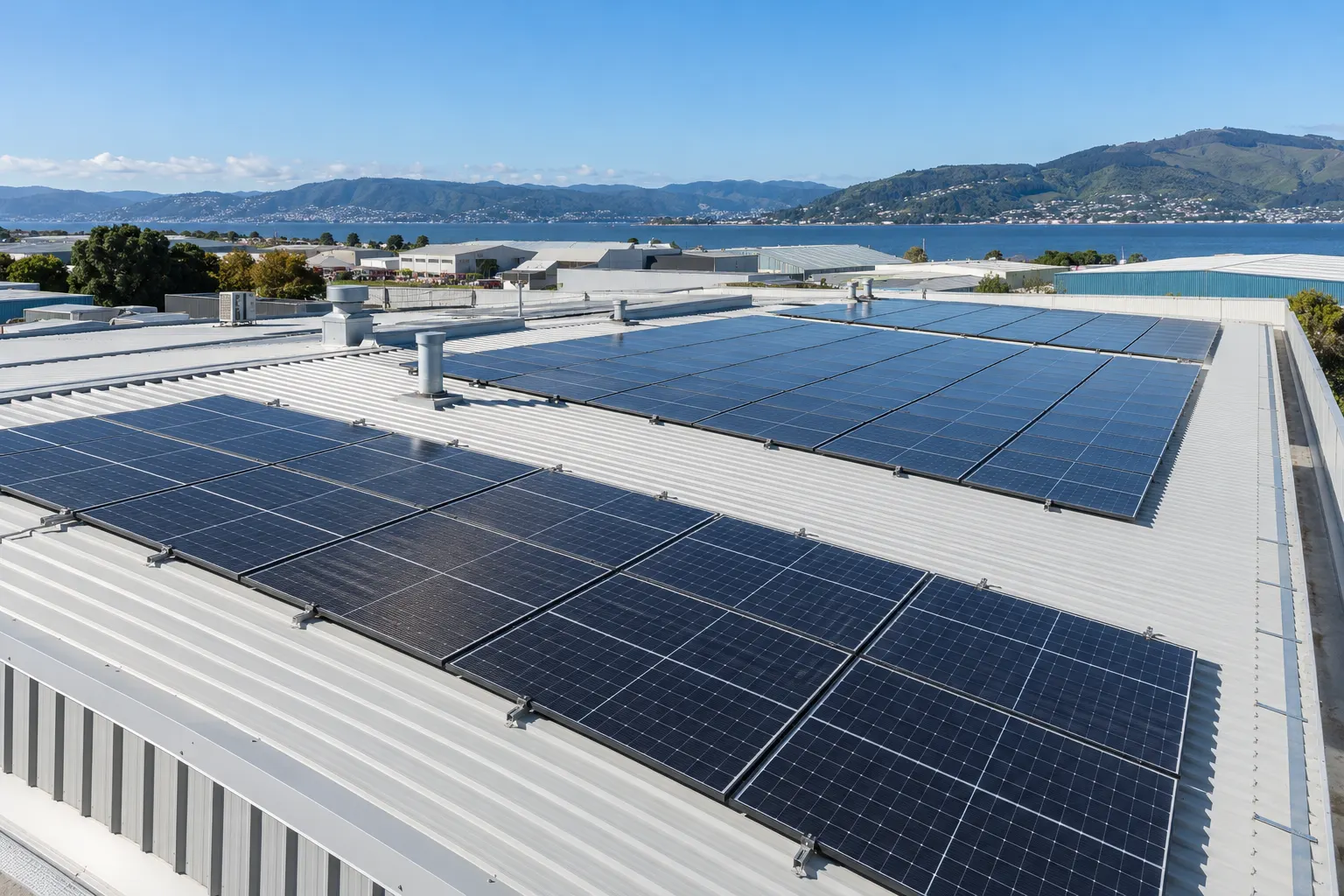
Commercial solar in Wellington should begin with the way a site operates, not a standard system size. We review electricity use through trading, production or office hours, along with roof access, shade, switchboard capacity and tenancy arrangements. That helps identify where generation may be used on site and where export rules could matter. We explain the network application process and the information a building owner needs before committing to a design.
What a commercial solar scope includes
We begin with available consumption data, the operating timetable and the loads that run while the building is occupied. Refrigeration, ventilation, workshops, kitchens, pumps and office equipment can have different profiles, so annual totals alone are not enough. We also review the roof, access routes and building occupancy.
The technical scope covers roof layout, mounting exposure, switchboard capacity, cable routes and a proposed connection approach. We identify the lines company for the address and prepare the application information required for the intended system. Electrical work is completed using EWRB-licensed workers, with the required compliance documentation provided once the prescribed work has been certified.
Common signs commercial solar is worth assessing
A commercial site may be a candidate when it has regular daytime electricity use and a roof with usable space. Businesses that operate through daylight hours often have a clearer opportunity to use generation on site than a premise that is mostly empty during the day. We look at the actual operating pattern, including seasonal changes, rather than assuming every business will use solar electricity in the same way.
It is also useful to assess solar before a planned electrical upgrade, lease decision, roof work or equipment replacement. Early review can show whether the roof, main switchboard or metering arrangement creates a constraint. Where multiple tenants share a building, we clarify who receives the electricity, who controls the connection and whether the expected benefit can be allocated sensibly.
Rooftop layouts and connection choices compared
A roof-wide layout can maximise available generation, while a smaller first stage may match known daytime demand more closely. The right choice depends on load timing, export allowance, roof condition and future plans for the site. We explain the trade-off between using more generation behind the meter and exporting more electricity when daytime demand is lower.
For a straightforward small distributed-generation connection, the Electricity Authority's 2026 amendment sets a default 10kW export limit or a flexible limit, with lower limits subject to assessment. Larger systems use a different approval path. We work from the address and intended capacity, then explain whether staged installation or export management should be considered before equipment is ordered.
What affects commercial solar cost
Cost factors include system capacity, roof construction, building height, access equipment, mounting design, cable runs, switchboard work and the complexity of keeping a site operating during installation. A warehouse roof and a multi-storey mixed-use building can require very different planning. Structural assessment may also be needed where loading, wind exposure or roof condition is uncertain.
Network work can change the scope as well. Wellington Electricity publishes separate processes for small systems and larger generation, while Electra and Powerco have their own application requirements. We identify the relevant process before finalising the design. For Wairarapa sites, Powerco states that export capacity can be lower where a transformer is constrained, which can affect system sizing decisions.
Wellington commercial sites need local checks
Commercial roofs in Wellington can be exposed to strong wind, coastal air and difficult access. We assess mounting and roof details for the site's wind conditions and inspect corrosion exposure where the property is near the coast. Shade from adjacent buildings, hills or plant equipment is considered in the layout, because a rooftop that looks open from the street may not be clear across the working day.
The connection path depends on location. Wellington Electricity covers Wellington City, Porirua, Lower Hutt and Upper Hutt; Electra covers Kāpiti Coast; and Powerco covers Wairarapa. We prepare the application with the project details, explain any export condition, and schedule installation around approval. Winter output is lower than summer output, so projections need to be read as seasonal patterns, not flat monthly results.
How the work is planned
- Assess site loads, operating hours, roof access, occupancy needs and the connection at your commercial address.
- Design a layout that balances usable roof area, self-consumption, wind exposure and planned business operations.
- Apply to the relevant lines company using the capacity and technical information for the proposed system.
- Install in agreed stages, coordinating roof access, electrical isolation and site safety with your operations.
- Certify the electrical work and provide the required Certificate of Compliance and inspection records.
- Switch on after approval and explain monitoring, export settings and routine operational checks.
What a good solar quote should show
Load timing is reviewed before capacity
We start with when the site uses electricity, not just the annual total on an invoice. That allows the design discussion to distinguish daytime operational loads from electricity likely to be exported. It is particularly useful for premises with variable opening hours, seasonal work or several major loads. The result is a clearer basis for choosing a system size that fits the site.
The network process is identified early
We identify the lines company and the applicable generation pathway before an installation date is set. Wellington Electricity has separate published arrangements for systems at or under 10kW and larger systems, while Electra and Powerco use their own processes. Handling the application as part of the project helps keep capacity, export conditions and compliance documents aligned with the equipment being installed.
Roof access and wind exposure inform the plan
We assess access, roof condition and exposure as part of the design rather than treating them as an installation-day issue. The proposed mounting is checked against the wind conditions relevant to the building and the electrical route is planned with the occupied premises in mind. This gives the owner a practical view of the work before the roof is booked.
Your questions, answered.
Can solar be installed without closing our business?
Often, installation can be staged around trading or operating needs, but the workable plan depends on roof access, electrical isolation and site safety. We discuss these constraints during assessment and set out the parts that may require planned downtime. A clear programme is more useful than promising that every site can continue unchanged.
How is a commercial system sized?
We consider daytime electricity use, roof space, shade, export conditions, switchboard capacity and future site changes. The aim is to understand what electricity is likely to be used on site and what may be exported. A larger roof does not automatically mean a larger system is the best fit for the operation.
What export limit applies to a business?
The limit depends on the connection, capacity and lines company. The Electricity Authority provides a default 10kW export limit or flexible option for straightforward small distributed generation, but larger systems follow another assessment path. We confirm the network process for the address and explain any approved export setting before installation.
Do we need consent for commercial solar?
The consent position depends on the building, roof work, structural requirements and site conditions. We check this during the design stage rather than assuming an exemption applies. Where needed, we involve the appropriate engineering input and make sure the design process considers Building Code requirements alongside electrical and network requirements.
Can a business add a battery later?
In many cases, a solar system can be planned to allow a later battery discussion, but compatibility, switchboard space, backup needs and operating profile should be considered first. We can include allowance for future equipment in the design conversation. Whether a battery makes sense depends on the site's loads and the role it would serve.
Further reading
Network rules and provider terms can change. Confirm current requirements for your address.